
Read the Jackpot Labels Before You Spin
 Available in US
Progressive, fixed, daily and networked jackpots work differently, while licensing, payments and bonus terms affect how mobile play works.

The Four Kinds of Jackpot Slot
“Jackpot” sounds like one feature, but it covers four different slot formats: progressive, fixed, daily or must-drop, and networked. They describe different things about the prize: whether it changes, how it is presented, or how it is connected across games. Once you separate those ideas, the labels on jackpot slot games become easier to read. Less mystery, more plain English.
Progressive jackpots
A progressive jackpot changes as play continues: the prize can grow rather than staying at a preset amount. That changing total is the format’s defining feature. It is not a promise that the next spin will pay out, or that the jackpot will reach a particular size before it does.
I used to see a rising figure and treat it like a countdown. It isn’t one. A progressive can trigger at random on any spin, and there is no reliable action that guarantees it will trigger. The amount on display tells you about the prize, not how close the game is to awarding it.
Choosing a jackpot mobile casino in the UK means finding an option that suits how you play and how you prefer to access your winnings. This list highlights the payout speed provided for each operator.
-
Chanze
- Payout speed
- 1-3 business days
Chanze lists a payout speed of 1–3 business days, giving you a clear timeframe to consider when planning withdrawals.
-
x3bet
- Payout speed
- 1-3 business days
x3bet lists a payout speed of 1–3 business days, a useful detail for you to weigh when considering access to your winnings.
-
NightLuck
- Payout speed
- 1-3 business days
NightLuck lists a payout speed of 1–3 business days. You can use this stated timeframe as one factor in your choice.
-
WinBeast
- Payout speed
- 1-3 business days
WinBeast lists a payout speed of 1–3 business days, giving you a stated timeframe for payouts.
-
Jetsetspins
- Payout speed
- 1-3 business days
Jetsetspins lists a payout speed of 1–3 business days. This gives you a straightforward detail to consider when choosing.
-
NightWin
- Payout speed
- 1-3 business days
NightWin lists a payout speed of 1–3 business days, which you can factor into your expectations for receiving a payout.
-
Zombillion
- Payout speed
- 1-3 business days
Zombillion lists a payout speed of 1–3 business days. You have a stated timeframe to consider when thinking about withdrawals.
-
Dieselwin
- Payout speed
- 1-3 business days
Dieselwin lists a payout speed of 1–3 business days, providing you with a clear point of reference for payouts.
-
Revery Play
- Payout speed
- 1-3 business days
Revery Play lists a payout speed of 1–3 business days. You can take this timeframe into account as you assess your options.
-
Amunbet
- Payout speed
- 1-3 business days
Amunbet lists a payout speed of 1–3 business days, a stated detail for you to consider when choosing a jackpot casino.
That distinction matters because the word “progressive” can sound like progress towards a win. In practice, it describes the jackpot’s changing value, not your personal odds or a sequence of steps you can complete. A jackpot slot machine can show a growing prize while offering no signal that a particular spin is due to land it.
Fixed jackpots
A fixed jackpot has a prize amount set for the game rather than one that rises as play continues. The simplest way to distinguish it from a progressive is to look at what the label describes: a fixed prize remains the stated prize; a progressive prize can change.
“Fixed” does not mean that the jackpot is easy to win, or that the outcome is predictable. It describes the prize structure, not the likelihood of a win. That is a useful distinction to keep in mind when comparing casino jackpot slots: a large-looking amount is not automatically a better fit, and a steady amount is not a clue that the game is about to pay.
Some jackpot slot games put the jackpot front and centre; others make it one feature among several. Either way, the fixed label is about the prize’s value being set, not about the rest of the slot behaving in a special or guaranteed way.
Daily and must-drop jackpots
Daily and must-drop jackpots are often grouped together, but the terms point to a different idea from “progressive” or “fixed”. They describe a jackpot associated with a time-based or must-drop condition, rather than simply whether the prize amount grows.
 Casino Types: UK Deposit, Payment and Access OptionsExplore how UK casino options are grouped by deposit limits, withdrawal speed, verification, mobile access and registration requirements.
 Highest-Paying UK Online Casinos: What RTP MeansLearn how RTP reflects theoretical returns over time, why 97% means £97 per £100 wagered in the long run, and what it…
The word “daily” suggests a prize linked to a daily cycle. “Must-drop” signals that the jackpot is presented as having a defined point by which it will be awarded. Those labels can sound reassuringly definite, but they do not tell you that your own play will win it, or that the jackpot is close to dropping when you arrive.
I have made the mistake of reading “must-drop” as “must drop for me”. It doesn’t mean that. The phrase concerns the jackpot’s stated condition, not a personal guarantee. Read the game’s own description carefully: the label alone does not explain every detail of how the condition works.
This family is still worth separating from a fixed jackpot. A fixed prize describes an amount that does not rise with play; a daily or must-drop label points to the way the jackpot is framed around a time or drop condition. A game can use promotional language that blurs those ideas, so focus on the explanation of the prize rather than the boldest words on the screen.
Networked jackpots
A networked jackpot is connected across participating games, rather than being confined to a single standalone slot. The network is the important distinction: the jackpot is shared across a wider group of games or participating operators.
That does not make “networked” a synonym for “progressive”. The words describe different aspects. Progressive tells you that the prize can grow; networked tells you that the jackpot is linked across a group. A networked prize may also be progressive, but one term does not automatically explain the other.
Progressive
A changing prize that can grow as play continues.
Fixed
A set prize amount that remains the same.
Daily/Must-drop
A prize associated with a time-based or must-drop condition.
Networked
A jackpot shared across a group of participating games or operators.
When I first saw a shared jackpot advertised beside a slot, I assumed the game itself must be a different kind of machine. Not necessarily. Think of the network as the structure around the prize, and the individual slot as the game you are playing. This keeps the categories straight without treating every shared jackpot as its own mysterious game mechanic.
The labels can overlap
These four families are useful starting points, not always four mutually exclusive boxes. A jackpot can be progressive in how its amount changes and networked in how it is shared. Daily or must-drop wording can add another description of its condition. So when a jackpot slot online uses several labels at once, check what each one is actually describing.
The quick way to sort them: progressive concerns a changing prize; fixed concerns a set prize; daily or must-drop concerns a time-based or stated drop condition; networked concerns a shared structure. That is enough to stop the labels from doing the selling for you. Read the wording, not the sparkle.
Playing Jackpot Slots Online: Stakes, Spins and the Rules
Playing a jackpot slot online is still a sequence of individual game cycles: choose a stake, start a spin and wait for the result. The jackpot may make the screen feel different from an ordinary slot, but it does not turn a spin into a special kind of wager. I used to focus on the headline prize and skim the controls. That is an easy way to lose track of what each play actually costs.

The stake limit matters before you press spin. Since 9 April 2025, the maximum stake for an online slot game cycle has been £5 for adults aged 25 and over. For adults aged 18 to 24, the £2 limit has applied since 21 May 2025. These are ceilings, not suggested stakes: you can choose less, and the limit does not mean you should play at the maximum.
A game cycle is the slot’s individual play, rather than a running total across a session. If you change the stake between spins, each cycle still has to remain within the applicable cap. The same rules apply whether you are playing a jackpot slot for real money or another online slot. A prize label does not exempt a game from the slot stake limit.
Slots are not table games
The cap is specific to online slots. Roulette, blackjack and live table games are not covered by this particular stake restriction, because they are different forms of gambling. That distinction is worth keeping straight when a casino groups slots and table games together in one lobby. A limit that applies to one category does not automatically apply to the others.
I have made the mistake of treating every game with a spinning animation as though the same rule must apply. The useful question is what kind of game you have opened, not how flashy the interface looks. A slot remains a slot even if it has a jackpot counter, bonus round or other features around its reels.
A spin is a single play, not a promise
Online slots run through repeated game cycles. You select the stake and initiate a spin; the result is determined for that play. There is no need to rush from one cycle to the next. In Britain, online slot spins must last at least 2.5 seconds, and autoplay is banned. So a game should not run through a hands-free sequence of spins while you watch passively.
That rule changes the rhythm of play. You have to initiate each spin rather than setting a chain of them running in the background. I find it helps to pause between plays and notice whether I still want to continue, rather than letting the next button become an automatic response. A short gap can make the session feel less like one long blur.
Operators must also provide reality checks and session reminders during gameplay. These prompts are there to bring your attention back to the time you have spent playing. They are not a prediction about whether a jackpot is close, and they do not change the result of a spin. Treat them as a moment to stop and take stock, not as something to dismiss without looking.
Before your first deposit, an operator must prompt you to set a financial limit. Account-level controls must also be accessible so you can manage that limit. It is easier to make a considered choice before play begins than to decide what is affordable while watching a balance move. I used to mistake having money available in an account for having a reason to keep playing. Not the same thing.

Keep the controls in view
The amount shown as a stake is the amount attached to that game cycle, so check it before you start. Slot interfaces can place stake controls beside buttons for other features, and a quick tap in the wrong place can change what you intended to play. Take a moment to confirm the displayed stake after adjusting it, especially if you have moved between games.
A jackpot graphic can draw your eye towards the prize and away from the ordinary details of play: the selected stake, the spin button and the session prompt. I try to read those details first. The headline is there to attract attention; the controls tell you what you are doing.
Playing jackpot slots online does not require a complicated system. Keep each stake within the relevant cap, remember that the cap is for slots rather than table games, and take the required prompts seriously. The rules do not make a jackpot predictable. They do make the shape of each play clearer. Slow down.
Jackpot Casinos in the UK: What the Licence Actually Means
A jackpot does not sit outside the rules just because it is attached to a slot or promoted on a phone. If you’re looking at a casino jackpot online, the first useful question is whether the business is authorised to offer gambling to people here. A polished site, familiar game branding or an app icon tells you nothing reliable about that.
In Great Britain, the UK Gambling Commission is the regulator for commercial gambling, including online casino activity. Its remit covers remote gambling offered to people in Great Britain even when the operator’s equipment is based elsewhere. That last point is easy to miss. A company cannot avoid the rules simply by locating its servers or offices abroad.
The Commission grants operating licences to gambling businesses. It also issues personal licences to individuals who carry out certain regulated roles. Those are different forms of authorisation: one concerns the business offering gambling, the other people working in relevant positions. When you see a reference to a licence, make sure it refers to the operator’s permission to provide the service, not just to a game provider or another company mentioned on the site.
I used to treat a licence badge as a decorative tick in the footer. That was a poor shortcut. The important point is not how official the badge looks, but whether the operator itself is authorised for the activity it offers. A jackpot game may come from a separate supplier; that does not replace the casino operator’s responsibility to hold the relevant permission.
The legal framework is not identical across every part of the UK. The Gambling Act 2005 governs gambling in England, Wales and Scotland, but not Northern Ireland. For the British market, operators offering remote gambling to consumers need the appropriate Gambling Commission licence, wherever their key equipment is located. So when a site describes itself loosely as a “UK jackpot casino”, read that as marketing language, not proof of its status or of which rules apply.

Age and identity checks are part of the rules before online gambling begins in Great Britain. They are not optional extras that a player can put off until a withdrawal, nor should a person be able to deposit first and have their age checked later. That can feel like friction when you simply want to open a game, but it is a basic safeguard, not a jackpot-specific condition.
This also explains why “mobile” does not change the licensing question. Whether you reach a casino through a browser or an app, the operator’s location does not remove the requirement to be authorised for remote gambling offered to people in Great Britain. The screen is different; the regulatory responsibility is not.
A licence is not a promise that every experience will be flawless, or that a jackpot is more likely to pay out. It means the business is operating within the relevant regulatory framework. I’d keep those ideas separate: the licence answers who is allowed to offer the gambling, while the jackpot itself is a feature of the game. Different questions.
Comparing Jackpot Casinos Without Falling for the Sales Pitch
A comparison table can make every jackpot casino site look tidy: a few labels, a verdict and a bright button. I’ve learned not to treat that as a promise about what happens when something goes wrong. The useful question is less “Which one looks best?” and more “What route would I have if I disagreed with a decision?”
Do
- Start with the complaints information
- Keep all exchanges in writing
- Follow the formal internal procedure
- Use IBAS if the issue remains unresolved
Don't
- Rely on headline ratings
- Assume a chat agent is the final stage
- Trust vague mentions of "support"
- Choose an operator based on presentation
Start with the complaints information, not the headline rating. Is there a clear way to raise an issue with the operator, and does the page explain what to do if the first answer does not settle it? A vague line about “support” is not the same as a complaints process. Keep the operator’s own instructions to hand before you need them; it is much easier to follow a stated route than to reconstruct it while frustrated.
If you do complain, keep the exchange in writing where you can. Set out what happened, what decision you are challenging and what outcome you are asking for. Save relevant messages and account records. That is not a trick for getting a favourable answer. It is a way to make the disagreement legible, especially if the conversation moves between departments or takes time.
Give the operator the chance to use its internal complaints procedure. Do not assume that a chat agent’s reply is the final stage; check the formal process and follow it through. If the complaint remains unresolved after that procedure is exhausted, you can take it to IBAS. Its rulings are binding on the licensed operator. That matters more than a comparison page’s confidence or star rating.
I would also read a site’s complaint wording with the same scepticism I bring to the word “best”. Does it explain where a complaint goes next, or does it just point you back to customer support? Does the comparison make clear that a glowing verdict is not a guarantee of a smooth outcome? If it skips the awkward part, I would not let its score settle the question for me.

This is not a reason to expect a dispute. It is a way to avoid choosing on presentation alone. A comparison can help you narrow down what to inspect, but it cannot decide whether an operator will handle your particular complaint well. And if you are already in a dispute, a ranking is beside the point: use the operator’s stated procedure, keep a record, and consider IBAS only after that route has run its course.
No magic badge. Just a route.
Real-Money Play: The Checks and Payment Limits to Expect
A jackpot can show as a win on screen before the money is ready to leave your account. That gap is where verification comes in. Every operator has to complete identity and anti-money-laundering checks before releasing funds. KYC means “Know Your Customer”; AML refers to checks intended to prevent money laundering.
It is easy to treat those checks as an annoying hurdle that appears only when you request a jackpot casino withdrawal. I used to think of them that way. In practice, they are part of the real-money account process, and a withdrawal is not simply a button press followed by an instant transfer. The operator needs to establish who you are and complete its checks before it can release the balance.
That applies whether the amount came from a jackpot or ordinary play, and whether you joined a brand with “instant” in its advertising. The label does not remove the checks. If you are comparing real-money jackpot casinos, look for clear information about verification and withdrawal handling rather than reading a fast-payment claim as a promise that your funds will be released immediately. The phrase “quick cashout” is marketing; verification still comes first.
What to expect before a withdrawal
The operator’s KYC and AML process is the key practical point. You may be asked to provide information or material needed to complete those checks. Follow the instructions in your account and respond accurately; guessing what will satisfy a check can create extra back-and-forth. If something is unclear, contact the operator before building plans around a jackpot casino withdrawal time. There is no single timing promise that follows from the fact that checks must be done.
Keep your account details consistent with the information you provide. If a request appears while you are trying to withdraw, read it carefully and use the operator’s own account channels rather than sending personal details in response to an unexpected message. A legitimate process can still feel frustrating. Better to pause than rush.
The payment restriction to know
Credit cards cannot be used for gambling payments in Great Britain. That matters when choosing how to fund an account: a payment method that looks like a convenient workaround is not suitable if it lets credit-card funds pay for gambling. The same restriction applies where a wallet can pass through credit-card money for that purpose.
So, before making a deposit, check what funding source the method actually uses. Do not assume that moving the payment through a wallet changes its nature. If you are looking at a jackpot casino promo code or free spins, keep that separate from the payment decision: a promotion does not change the rules for funding or the checks required before winnings are released.

The boring part, admittedly. Still matters.
Jackpot Bonuses: Read the Wagering Terms Before You Deposit
A welcome bonus can make a jackpot casino look more generous than it is. I’ve learned to treat the headline as the start of the offer, not the deal itself. The useful part is the terms: they tell you what you must do before bonus funds or any associated winnings can be withdrawn.
Start by checking whether the offer is a bonus balance, free spins or another promotion, and whether you need to opt in. Then look for the wagering requirement and read how it is calculated. It may apply to the bonus, winnings from the bonus, or both. Those are different obligations, so don’t assume the largest figure on the page tells the whole story.
The next question is which games count. A slot may appear in the casino’s jackpot section without qualifying for bonus wagering. Progressive jackpot slots are excluded from games that count towards wagering requirements. If the terms are vague about a particular game, don’t assume its spins will move the requirement along. Check the promotion’s game exclusions before you play.
That matters even more when a bonus advertises a chance at a jackpot in the casino. A jackpot prize and a bonus balance are not interchangeable: the promotion’s terms determine how the bonus can be used and what happens to winnings. Don’t build a plan around a jackpot contribution unless the rules explicitly explain it.
- Check if the offer requires opting in
- Identify the wagering requirements and calculation method
- Verify which games count towards wagering
- Check for progressive jackpot slot exclusions
- Read conditions for no-deposit or sign-up offers
A no-deposit bonus removes the deposit condition, not necessarily every condition. Check who can claim it, whether registration or an offer code is required, which games are eligible, and what restrictions apply to withdrawals. A “free” offer can still come with strings. Read them first.
For a jackpot casino sign-up bonus, check the same points as you would for a welcome offer. The label may change; the conditions are what matter. If you are considering a bitcoin casino jackpot promotion, look carefully at whether the bonus is tied to a particular payment route or account currency. Don’t treat a crypto reference in an advert as proof that the offer suits you.
I also keep the financial limit separate from the bonus decision. Remote gambling businesses must prompt new customers to set one before their first deposit and make limit controls accessible. Review yours every six months. A promotion is not a reason to set a figure you would not choose without it.
If the terms are hard to find, unclear about eligible games, or inconsistent between the advert and the full rules, I’d leave the offer alone. Missing out is cheaper than discovering the real conditions after you’ve opted in.
Progressive and Live Jackpots: How the Pool Builds
A progressive jackpot is a prize that can grow as play feeds into a shared pool. In a networked version, the pool is connected across participating operators rather than being built from one casino’s players alone. That makes the displayed amount a moving total, not a promise about what any one person will win.

The pool may begin at a set starting level. Once it is above that floor, each spin on the linked game at each participating operator contributes a small portion to it. The additions come from play across the network, so the figure can rise even while you are not playing. “Growing jackpot” sounds like a plan; it is just a pool receiving contributions.
A live jackpot display can make that movement feel immediate, but watching the number climb does not tell you when it will pay. The progressive prize can trigger at random on any spin. There is no guaranteed sequence, countdown or way to make a particular spin trigger it. A long stretch without a winner does not mean the next spin is due.
I used to read a rising total as if it were building towards a moment I could time. That is the trap: the amount tells you how large the pool is, not how close it is to being won. The trigger remains uncertain, whether the displayed total has just moved or has been climbing for a while. No signal in the number turns uncertainty into a schedule.
Stake size does not change that trigger. The same progressive can trigger on a £0.10 spin or a £5 spin; staking more does not make the jackpot more likely to land. It may change what you spend per spin, but it does not give you a better trigger chance. Keep those two ideas separate.
There is a difference between the pool’s growth and the event that awards it. Contributions explain why the jackpot total can increase; they do not reveal the trigger mechanism in a way that lets you predict a win. Nor does a large headline amount mean that every linked game or operator shares one universal pool: the shared network applies to the particular jackpot and its participating games.
So when a game advertises a “live” progressive, I treat the display as a running pool total, not a cue to chase it. The number can be exciting to watch. It is not a forecast. The jackpot can arrive without warning—or not on the spin you hoped.
Jackpot Games on Mobile: What the Experience Changes
A jackpot game can look familiar on a phone, but the way you use it changes. The screen is smaller, your fingers cover part of it, and a control that is easy to spot on a desktop can be cramped on mobile. I’ve learned not to judge a game from its first screen alone. Take a moment to check that the balance, spin control and game information are readable before settling in.
One specialist review reports that 80% of UK casino sessions take place on mobile. Treat that as a snapshot from one review, not a permanent measure of how everyone plays. Still, it reflects why the phone experience matters: for many players, it is the main way they reach casino games.

A jackpot casino app may feel more direct than opening a site in a browser, but the label alone tells you little. I look at whether the game loads cleanly, whether menus remain usable in portrait or landscape view, and whether the screen keeps its place if I switch away briefly. Those are practical details, not a promise that an app will make a game more rewarding.
Before installing anything, check what the app asks permission to access and whether you actually need a separate download. If a browser version is easier to read and control, there is no prize for using an app instead. On the other hand, an app that fits your device well can make returning to a game less fiddly. Your mileage depends on the phone and the software.
Touch controls deserve a quick test, too. Small buttons and accidental taps can make a session feel rushed, especially when you are trying to read information between spins. I’d rather pause and adjust the display than keep tapping and hope for the best. Not glamorous. Just sensible.
Mobile convenience can also make it easier to open a game without thinking. Keep your own stopping point in mind, and use the device’s settings to reduce interruptions if notifications distract you. The phone changes the setting, not the underlying game. A better-looking screen is still only a screen.
Crypto Jackpot Casinos: Check the UK Safeguards First
A jackpot paid in cryptocurrency can sound like a simple change of payment method. The bigger question is where the casino is licensed. Crypto does not give an operator permission to serve people in Great Britain outside the UK regulatory system.
For real-money gambling offered to customers in England, Scotland and Wales, the operator needs a UK Gambling Commission licence, wherever its key equipment is located. A site operating offshore without that licence is not part of the UKGC system. That means the protections and routes for complaints available through UK-licensed gambling do not automatically follow you there. A polished website is not a substitute.
I would treat claims such as “top jackpot casino” as advertising, not evidence. Look for the operator’s legal identity and check the relevant regulator’s own register; make sure the name and licence details actually match. A current check of the Curaçao Gaming Authority’s public register shows Usoftgaming N.V. with an active business-to-consumer licence, numbered CGA/2025/1353/1345. That is a Curaçao licence, not a UK Gambling Commission licence. A separate review’s register check did not find an entry for Hustles Casino. Register information can change, so neither detail should be treated as a standing endorsement.
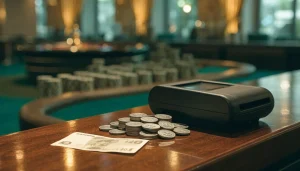
If a crypto jackpot site is outside UK regulation, do not assume that a dispute will have the same path as one with a UKGC-licensed operator. Nor should you read an offshore licence as proof that the site is approved to offer gambling to people in Great Britain. The distinction matters more than whether the cashier accepts coins or conventional payments.
I have been drawn in by the “instant” part of crypto promotions before. What sits behind the headline is the operator’s legal status and the rules that apply if something goes wrong. If those are unclear, pause rather than sending funds to find out later. Crypto can make a transaction feel detached from ordinary gambling, but the risk is still real money.
For a UK player, the safer boundary is clear: use gambling services licensed for the British market, and do not treat an offshore crypto licence as equivalent. The payment technology may change. The safeguards do not travel with it.

Slot Jackpot Odds: What You Can—and Cannot—Know
The odds of winning a jackpot on slots are not something you can read from a lucky-looking run of spins. A machine’s recent results do not tell you when its jackpot is due, and a quiet spell does not mean a win is getting closer. I used to treat patterns as clues. They weren’t.
How often a slot hits its jackpot depends on that particular game’s design. Without reliable information about its odds, there is no honest way to turn “rare” or “frequent” into a precise prediction. A game’s general payout information, where provided, is not automatically the probability of hitting its top prize. Those are different things.
With a progressive jackpot, the trigger can happen at random on any spin. There is no guaranteed method for making it happen, and waiting longer does not make the next spin a certainty. Nor can you force a win by changing your timing, chasing a loss or following a sequence you think looks promising.

That is the uncomfortable bit. No system can tell you which spin will land the jackpot. Claims that a particular time, pattern or ritual can make it happen are sales talk, not a dependable edge.
If you play, treat each spin as uncertain and decide beforehand what you are comfortable spending. A jackpot is a possible outcome, not a target you can work your way towards. I have learned to stop when I catch myself thinking, “It has to be close.” It doesn’t.
So, how do you win a jackpot on a slot machine? You can play a game that offers one, but you cannot reliably bring the winning spin about. And if a site or tipster claims otherwise, ask what evidence supports the claim before you risk money on it.
Casino Types: UK Deposit, Payment and Access Options
Content created by the «whynother» team