
Choose a Table That Fits Your Pace and Budget
 Available in US
Live blackjack involves physical cards, a human dealer and a slower rhythm, so table details and session limits matter.
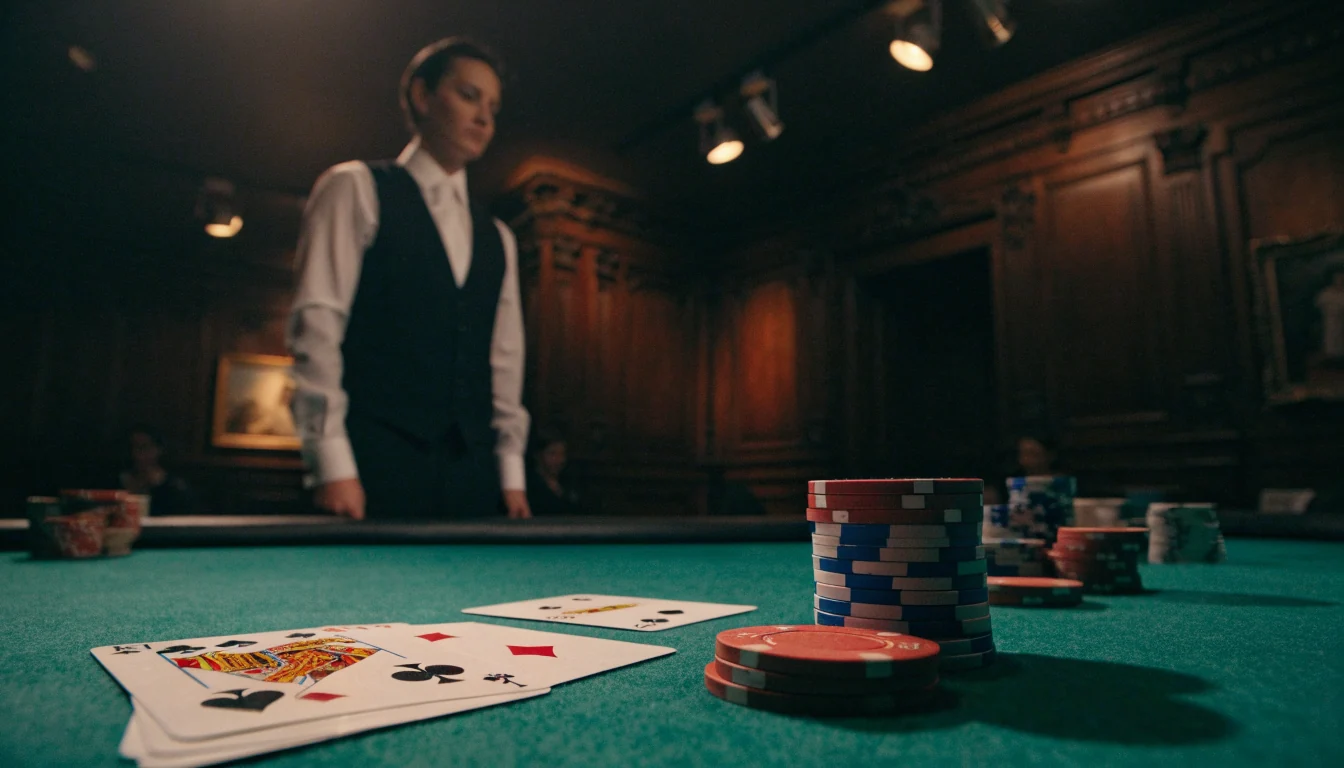
What Makes a Live Blackjack Table Worth Your Time?
“Best” sounds like a settled verdict. In practice, the best live blackjack table for you depends on what you can comfortably spend, how much time you want to give a session and whether your connection can handle a live game without interruptions. I’ve made the mistake of treating a polished lobby as proof that a table would suit me. It isn’t. The details matter more than the sales language.
Start with pace. Live games run more slowly than digital versions, so there is more waiting between decisions. That can suit you if you want a less hurried session and are happy to stay focused on one table. If you prefer quick rounds or tend to lose patience when play pauses, the live format may feel like a poor fit. A table is not automatically more enjoyable just because it has a human dealer; the slower rhythm is part of the deal.
I used to think a slower game meant I could relax and pay less attention. Not quite. Waiting does not make a session effortless, and a drawn-out game can still hold your attention for longer than you intended. I now think about the pace before joining, rather than deciding after I’ve already settled in. Boring, perhaps. Useful, though.
When choosing a UK online casino for live blackjack, payout information can help you assess what to expect after a win. Use these verdicts as a concise reference alongside your own checks of each casino's live-game offering.
-
Chanze
- Payout speed
- 1-3 business days
Chanze lists a payout speed of 1–3 business days. You can use that as a reference when considering how quickly you may receive a withdrawal.
-
x3bet
- Payout speed
- 1-3 business days
x3bet lists a payout speed of 1–3 business days. You can factor this stated timeframe into your assessment.
-
NightLuck
- Payout speed
- 1-3 business days
NightLuck lists a payout speed of 1–3 business days. This gives you a stated timeframe to consider for withdrawals.
-
WinBeast
- Payout speed
- 1-3 business days
WinBeast lists a payout speed of 1–3 business days. You can keep this timeframe in mind when weighing your options.
-
Jetsetspins
- Payout speed
- 1-3 business days
Jetsetspins lists a payout speed of 1–3 business days. This is the available information to guide your expectations about withdrawals.
-
NightWin
- Payout speed
- 1-3 business days
NightWin lists a payout speed of 1–3 business days. You can use the stated timeframe as one point in your decision.
-
Zombillion
- Payout speed
- 1-3 business days
Zombillion lists a payout speed of 1–3 business days. This gives you a clear stated timeframe to consider for payouts.
-
Dieselwin
- Payout speed
- 1-3 business days
Dieselwin lists a payout speed of 1–3 business days. You can take this information into account when considering the operator.
-
Revery Play
- Payout speed
- 1-3 business days
Revery Play lists a payout speed of 1–3 business days. This stated timeframe can help inform your expectations for withdrawals.
-
Amunbet
- Payout speed
- 1-3 business days
Amunbet lists a payout speed of 1–3 business days. You can use this as a reference when assessing the operator.
Then look at the minimum stake, not just the most prominent figure in a lobby tile or promotion. A low advertised entry point elsewhere on the site does not tell you what a particular blackjack table requires. The starting limit can vary by table, so check the actual table details before you join. If the minimum is more than you planned to spend, moving to a different table—or closing the lobby—is a sensible choice. Don’t let the idea of finding the “best blackjack casino UK” turn into a reason to stretch your budget.
One specialist review has compared low starting stakes at live roulette and baccarat tables with higher starting limits at blackjack tables, but that is a source-specific observation, not a reliable rule for every casino or a promise about current tables. Use the table’s own displayed limit to make your decision. In any case, a minimum stake only tells you the entry point; it does not tell you what you should bet or how long to play.

Set a budget before you start, and treat it as a boundary rather than a target you need to use up. I have found it easy to make a planned session feel more “worthwhile” by increasing the amount at stake. That is just spending more, dressed up as a strategy. If the table’s minimum does not fit your budget, it is not the right table for that session.
Connection is another practical filter. Live games need a stable internet connection. If your signal drops or your device struggles with the stream, the experience can become frustrating just when you need to make a decision. I would rather wait until I have a dependable connection than start while distracted by buffering or worrying about whether the game is still responding. It is not a glamorous check. It can save a lot of aggravation.
Think about where and how you plan to play, too. A live table asks for more attention than a game you can move through at a quicker pace. If you are likely to be interrupted, trying to fit a session around other tasks may not work well. The table’s pace, your available attention and the connection all have to line up. If one of those is already a problem, the “premium” label will not fix it.
When comparing live blackjack options, I would keep the checklist plain: is the minimum stake within your limit, are you comfortable with the slower pace, and can you rely on your connection? Those are more useful questions than a ranking that declares one operator the best for everyone. A best blackjack online casino for one player might have a table that feels too slow or too costly for another. There is no magic badge that makes those trade-offs disappear.
- Check if the minimum stake fits your budget
- Assess if you are comfortable with the slower pace
- Verify that your internet connection is stable
I also try not to confuse choice with obligation. A lobby may show several tables, but you do not have to join one simply because you opened it. If the limits do not suit you, or you are not in the mood to wait through a slower game, leave it for another time. It is easier to make that call before you have started than to negotiate with yourself once you are playing.
This is entertainment, not gambling advice. Decide what you are comfortable spending before you play, and stick to that limit. My own rule is simple: if the table asks for more time, money or connection quality than I can give it, I move on. No table is worth forcing the fit.
The Dealer Is Live; the Cards Are Physical
A live blackjack table is not a computer animation dressed up to look like a casino. You watch a real dealer through a live video stream, with the game taking place in front of a camera. The dealer handles physical cards from a standard deck, while your bets and choices are sent through the on-screen controls.
That split between video and interface is the part that can feel odd at first. The dealer is on screen; your hand is not in theirs. You use the controls to take part, then watch the action unfold at the table. It is still an online game, but the cards are being handled in a real studio rather than generated as part of a digital display.
 Keno Online Casinos in the UK: Rules, Odds and ChecksLearn how online keno works, how paytables shape payouts and what to check at a casino; standard rounds draw 20 numbers from…
 Live Roulette UK with English-Speaking DealersLearn how live roulette differs from RNG games, how the digital betting interface works, and what practical details to check before choosing…
I find the physical details make the stream feel less abstract. You can see the dealer pick up and deal the cards, rather than seeing only symbols appear on a screen. The camera is there to show the table, not to turn the dealer into a character in a game. It is a small distinction, but it changes the feel of the session.
The stream also gives you a human point of contact. On tables with chat, you may be able to send a message to the dealer or communicate with other players. That can make a quiet session feel more social, though chat is an optional extra, not the whole point of playing. I would not assume every table offers it, or that you need to use it. Watching without typing is perfectly ordinary.
There is a difference between seeing a dealer and having a conversation with one, too. The dealer is managing the table and responding within the format; this is not a private conversation. If you do use chat, keep it simple and remember that the game is still proceeding through its controls and table interface. No need to perform for the room.
Some tables also show side bets, separate from the main betting area. They can make the screen look busier, especially when you are new to the layout. Treat them as optional features rather than something you must add to participate. Their presence does not change the fact that the dealer is handling physical cards; it just gives the table another on-screen choice.
Bet Behind is another possible feature. It lets you place a wager behind another player’s hand, rather than taking a seat for your own hand. Availability depends on the table, so it is worth noticing what the interface actually offers before assuming you can use it. The label may sound self-explanatory, but the useful detail is whether the option appears on that particular game.
A live dealer blackjack casino can therefore feel part viewing, part interaction: a real-time picture of a dealer and cards, paired with buttons for taking part. The stream gives you something tangible to follow; the interface is how you act. If you have only played digital blackjack, that combination may take a moment to settle into. It is not a magic trick, and it does not make the screen a physical casino. It is simply a live table delivered online.
The extras vary. One table may offer chat, another may display side bets or Bet Behind, and another may keep the screen more stripped back. I try to read the table in front of me rather than assume every live game works the same way. That is less glamorous than a sales pitch. More useful, though.
Checking a UK Blackjack Site Before You Play
A polished homepage can make a casino look reassuring. I’ve learned not to treat tidy design, familiar payment logos or a confident “trusted” badge as proof that the operator is entitled to serve players here. For a live blackjack site, the first check is the one that matters most: whether the company offering the game holds the appropriate UK Gambling Commission licence.
 Progressive Slots Online in the UK: How Jackpots WorkLearn how linked machines fund shared jackpots, how a win can land, and what to weigh when comparing progressive slots, odds and…
 Online Bingo UK: Rules, Tickets and Casino GamesLearn how 90-ball and 75-ball bingo differ, how line and full-house prizes work, and what to check when bingo and slots share…
Remote gambling operators serving the British market need a Gambling Commission licence, wherever the business is based. Live dealer casinos are legal in the UK when they hold that licence. If a site takes UK customers but does not have the required UKGC authorisation, a professional-looking blackjack lobby does not change its status.
Check the operator, not just the brand
A casino’s brand name and the company responsible for running it may differ. Find the site’s terms or licensing information and note the legal operator named there. Then check that operator against the Gambling Commission’s public register. The Commission’s website is the place to confirm licensing, rather than relying on a logo or a claim copied into an advert.
Read the details carefully enough to make sure they refer to the same business. A licence belonging to another company with a similar name is not confirmation that the site you are using is covered. If the operator’s identity is hard to establish, or the licensing information does not line up with the register, pause instead of filling in the gaps yourself.
This is a more useful filter than searching for “best” or “top” blackjack casino sites and trusting whoever has the loudest recommendation. A ranking cannot replace checking the legal operator. And a site being accessible from the UK is not, by itself, proof that it is licensed to serve British players.
Look beyond the badge
Once the licence check is clear, read the site’s terms before creating an account or depositing. Check that they identify the operator and explain the conditions that apply to customers. Keep an eye out for vague wording or details that seem to conflict with the licensing information. If the site makes a claim you cannot reconcile, do not assume it is harmless fine print.
I also separate site checks from sales language. Words such as “exclusive” or “VIP” are selling points, not evidence of regulation. Bonuses need their own scrutiny too: check wagering requirements, game weighting and any maximum-bet conditions before opting in. An offer can look generous while its terms make it a poor fit for live play.
Before you join a table, review its rules and paytable; they can vary between games. Decide on a budget before playing and stick to it. Those steps do not make a site licensed, but they help keep the decision about playing separate from the decision about trusting the operator.
A sensible check is not complicated, but it does require more than spotting a badge. Confirm who runs the site, verify that company’s UKGC status, and read the relevant terms. If any of those pieces remain unclear, I would leave the account unopened. No glossy lobby is worth guessing over.
This page is for entertainment purposes only, not gambling advice.

How Blackjack Works—and Why No System Guarantees a Win
Blackjack’s aim is simple to state: finish with a hand closer to 21 than the dealer’s, without going over. If your total exceeds 21, you lose the hand. If the dealer goes over and your hand has not, you win; if both stay within the limit, the higher total takes it. That is the basic idea behind how casino blackjack works, whether you are seated at a physical table or playing online.
Simple to learn. Hard to control.
I used to think the main challenge was finding a clever way to win more often. That is an easy trap, because “system” sounds like a plan rather than a staking pattern. Martingale is a familiar example: after a loss, increase the next bet in the hope that one win will recover what you have lost and leave a small profit. The catch is that a losing run can make the required stakes climb quickly, while your balance and the table’s limits do not stretch forever. A win is not scheduled to arrive just because you have lost several hands.
That does not mean every betting pattern is identical in how it feels. It means none can remove blackjack’s house edge. The game still favours the casino over time, and changing the size or order of your bets does not guarantee that you will beat it. A staking system can shape how much you risk from hand to hand; it cannot make the cards behave differently.
I learned that the expensive way. Chasing a loss with a bigger bet can turn a bad session into a worse one, and a recovery plan can start to feel compulsory once you are already frustrated. There is no special point at which the next hand owes you a win. Past losses are gone; the next outcome does not have to balance them.
So what does “how to win at blackjack” mean in practice? There is no method that promises a result. You can understand the objective, decide what you are willing to spend before you start, and stop when you reach that limit. That keeps a session within bounds; it does not change the odds or turn a losing game into a profitable one.
The distinction matters online too. A live stream or a digital table may make the experience feel different, but neither format makes a staking progression certain to work. If you are choosing a system because it claims to guarantee recovery, treat the claim as a warning sign, not a shortcut.
I have also found it useful to separate a good decision from a good result. A hand can go against you even when you felt calm and stayed within your plan. One win does not prove a system works, any more than one loss proves you should double down. The outcome of a single hand is not a reliable test of a betting approach.

Before joining, set a budget you can afford to lose and stick to it. Don’t raise it to recover losses or keep playing because you feel a win is due. Blackjack can be entertaining, but it is still gambling, not a way to make dependable income. This is for entertainment only, not gambling advice.
Blackjack Games: What the Live Format Changes
The biggest difference between live and digital blackjack is not a new way to play; it is how the game reaches you. A digital game is presented through the software on your screen. In a live game, a studio stream shows a human dealer in real time, while you make your selections through an on-screen interface. You are watching an ongoing table rather than a wholly software-presented one.
That changes the feel of a session. Digital games move more quickly; live games have a slower pace because play unfolds through the stream. You have time to watch the table, but less control over how quickly the next moment arrives. I used to treat that extra time as a bonus, then found myself getting impatient and clicking around between decisions. The format sets the rhythm. You do not set all of it.
There is a practical trade-off, too. Live blackjack tables have higher minimum bets than digital versions, so the amount needed to take part can affect how long you are comfortable staying at the table. That matters more than the studio setting or polished presentation. A game can look inviting and still not suit the amount you planned to spend.
Do
- Choose live format for a real-time studio experience
- Use digital versions for a quicker pace
- Stick to a pre-set budget
Don't
- Rely on a live stream with an unstable connection
- Confuse production value with a better game fit
- Exceed your budget due to a polished presentation
The stream also depends on a stable internet connection. If your connection struggles, the live presentation can become frustrating at exactly the point when you want to follow what is happening. A digital version does not rely on a live studio feed in the same way, so the two formats can feel quite different when your connection is unreliable. I would not choose a live table just for the atmosphere if the stream keeps breaking up.
The on-screen interface is the bridge between watching and taking part. You are not placing bets across a physical table; you use the controls shown on screen while the dealer’s game is streamed to you. That combination can feel more social and immediate than a digital presentation, but it is still an online session with its own pace and connection demands. “More immersive” is marketing shorthand, not a guarantee that you will enjoy it.
If you are deciding between a casino blackjack game in live or digital form, think about what you want from the session. Choose live if seeing a real-time studio game is part of the appeal and you are content with a slower rhythm. Digital may fit better if you want a quicker presentation and do not need the live stream. Neither format changes the need to stay within a budget you set beforehand.
A live blackjack casino game is not automatically better because a dealer appears on screen. The presentation is different; the extra time, higher minimums and connection requirement are real parts of that difference. I have learned not to confuse production value with a better fit. That is the useful distinction.

This content is for entertainment purposes only and is not gambling advice.
Live Blackjack in the UK: What to Expect at the Table
A live blackjack table puts a human dealer on screen in a real-time video stream. You see the dealer as the game unfolds, rather than watching an animation stand in for a person. The cards are physical, dealt from a standard deck, and the betting takes place through the casino’s on-screen controls.
That combination is the point of the format. The screen gives you a view of a real dealer and real cards, while the interface handles your part of the game. It feels different from a fully digital version, even though you are still playing remotely. I find that distinction matters: the live presentation can feel more immediate, but it does not make the outcome more predictable.
The stream is also the centre of the experience. Your attention moves between the dealer, the cards and the controls on screen. There is a real person there, but the game is still being experienced through a device and an internet connection. It is not the same as sitting at a table in a physical casino. Small difference. Still a difference.
When you look for a Blackjack casino in the UK, “live” should mean more than a label on a game tile. In this format, the dealer appears in real time and handles physical cards; the casino interface is how you take part from wherever you are. A live table can therefore feel more social and grounded than a computer-run game, without turning it into face-to-face play.
I used to treat live tables as if the extra realism meant I was somehow closer to a sure thing. That was wishful thinking. A visible dealer and a proper deck change how the game is presented, not what a player can control. It is easy to get drawn into the atmosphere and forget that a stream is still gambling. Keep your budget in mind before you start, and do not let the pace or presentation push you past it.
There is no need to read more into the label than that. A UK Blackjack casino offering live play gives you a real-time view of a human dealer and physical cards, with an interface for joining in. Whether that setup suits you is personal; the presence of a dealer does not make every live game the same or guarantee a particular kind of experience.
I’d describe it plainly: blackjack presented through a live stream, with a dealer handling the cards on camera. That is what sets it apart. The rest is still a game of chance, not a promise dressed up as atmosphere.
This article is for entertainment only and is not gambling advice.
Blackjack Rules Before You Join a Table
The aim is simple to state: finish with a hand closer to 21 than the dealer’s, without going over 21 yourself. That is the core of blackjack, but it is not a complete set of table rules. I used to treat the name of the game as if it told me everything I needed. It doesn’t.

Before you place a bet, read the rules shown for that particular table and check its paytable. These are the terms that explain how that game operates and what its listed payouts are. Don’t assume that a familiar-looking table follows every rule you remember from another game. If an explanation is unclear, pause and look for the table’s help information rather than trying to work it out after play has started.
That is the unglamorous bit. Worth doing.
A rules panel can feel like something to skim past, especially when the dealer is ready and other players are already there. I’ve made that mistake: I wanted to get straight to the game, then realised I had not properly checked the terms in front of me. There is no prize for being the quickest person to bet. Take a moment and make sure you understand what the table says before committing money.
The same goes for the paytable. Read what it says rather than relying on a general idea of how blackjack is supposed to work. If a term or payout is not clear, don’t fill in the gap with an assumption. Different wording can matter, and guessing is a poor way to learn a game that involves real stakes.
A useful check is to ask yourself whether you can explain the aim in your own words and whether the table’s listed rules and payouts make sense to you. If not, hold off. This is not about memorising a strategy or trying to predict what the dealer will do; it is simply making sure you know the conditions of the game you are choosing to play.
Reviewing Table Rules
-
1
Read the rules panel
Check the specific rules for the table to understand how that particular game operates.
-
2
Examine the paytable
Review the listed payouts to ensure you know the conditions before committing money.
-
3
Confirm your understanding
Verify if you can explain the aim and rules in your own words before placing a bet.
For UK players looking at casino blackjack rules, the basic objective remains the same, but the specific table information is what you should rely on before playing. Keep your budget set before you begin, and treat the rules and paytable as part of that decision, not as fine print to revisit only after a hand goes badly. This is entertainment, not gambling advice. No table can promise a result.
A short pause helps. Read first, bet second.
How to Join a Live Game Without Rushing Your Decisions
Joining live blackjack is a little different from opening a digital game. You watch a real-time stream from a studio, while an on-screen interface lets you place your bets. The stream and controls share the screen, so you can follow what is happening without leaving the game to make each move.
I used to treat that slower rhythm as an invitation to do something else between hands. That was a mistake: split attention makes it easier to click without thinking. Now I settle in first, check that the stream is running clearly, and get familiar with the controls before joining a round. Less fiddling, better focus.
The pace is slower than in a digital version, because live play follows the dealer and the table rather than moving straight from one decision to the next. That can feel more involving, but it also means you should not join expecting a quick run of hands. Give yourself time to watch and use the interface deliberately.

A steady connection matters. If your internet drops or the stream keeps freezing, the table becomes harder to follow at the moments you need to act. I’d rather wait until my connection is behaving than try to play through a patchy signal. No drama—just a better chance of staying with the game.
Before you sit down, set a budget you’re comfortable with and stick to it. Live tables also have higher minimum bets than digital games, so check the displayed limit before you commit. If the minimum does not fit your budget, leave that table rather than stretching your plan to join it. A live dealer does not make a stake more manageable.
If you want to play blackjack online at a casino, the basic routine is simple: open the live table, watch the stream, use the controls to place your bet, then follow the round as it unfolds. The important part is not to rush because other players are ready or because the interface is waiting. Take a moment to understand what you’re seeing and what you’ve selected.
Some sites may offer a free-play mode, but treat it as a way to get used to the screen, not as a source of real winnings. And whether you’re practising or playing for money, keep the experience within your limits. If you feel yourself clicking just to keep up, pause. You can always come back when you’re ready.
Blackjack Bonuses: Read the Small Print First
A blackjack casino bonus can look like extra room to play, but the headline rarely tells you whether it applies to live blackjack. I’ve learned to treat “free” as a label, not a benefit: the offer may be restricted to a different game, or its terms may make it hard to use at the table you had in mind.
A specialist review of UK welcome offers reports that many are free spins for slots and cannot be used at live tables. That is worth checking rather than assuming every casino bonus works across its games. If you are looking for a blackjack casino bonus in the UK, open the promotion’s full terms and find the eligible-games section before opting in. A banner saying “welcome offer” does not settle the question.
Even when live blackjack is eligible, it may contribute only a small share towards wagering requirements. Some terms give live games a 10% weighting: in that case, a qualifying bet does not count in full towards the requirement. The percentage and the games included are specific to the offer, so read the wording attached to that promotion rather than relying on a general description.

Check the wagering requirements, game weighting and any maximum bet limit before you accept. Also note whether the offer has to be activated, which games qualify, and what happens if you switch games. Those conditions determine whether a casino blackjack bonus offer is usable for your plans; the headline amount does not.
“No deposit” sounds especially tempting because it suggests trying an offer without making a deposit. But a blackjack casino no deposit bonus is still governed by its terms. Check whether live blackjack is eligible, how wagering is counted and whether any limits apply. The same applies when comparing no-deposit offers across blackjack casinos: don’t assume the word “blackjack” in a promotion’s title means the live version qualifies.
If the terms are unclear, I’d leave the offer alone rather than build a session around a guess. Set a budget before you play, and don’t chase losses or winnings to meet a promotion’s conditions. This is for entertainment, not gambling advice. A bonus is optional; the small print isn’t.
Finding a Casino With Blackjack—and Checking It Is UK-Licensed
When I’m looking for blackjack, I start in the casino’s game lobby rather than trusting a banner that says “live” or “featured”. Use the lobby search or browse its table-game and live-dealer categories, then check that blackjack is actually available. A casino may offer plenty of games without making the format you want easy to spot.
If you want a live table, make sure the listing identifies it as live blackjack, not just blackjack. That small distinction matters when you’re choosing what to open. I’ve clicked through a polished lobby before and found that the game I expected was not the one I’d selected. Annoying, but avoidable.
The UK licence check is the part I would not skip. A live-dealer casino serving UK customers must hold a UK Gambling Commission licence to operate legally. Look for the operator’s licensing information and confirm it against the Commission’s public register; a UK-facing design or a familiar payment option is not proof of a licence. If the operator cannot be matched to a current licence, don’t treat it as a legal UK casino.
Keep the practical side simple: set a spending limit before you start, and don’t use a credit card to gamble. Finding a blackjack table is only the first step; it does not make a site suitable for you, or turn a gamble into a reliable way to make money. This is entertainment, not gambling advice.
Why does the dealer always win in blackjack?
The dealer does not always win. Blackjack has a house edge, so the casino has an advantage over time, but individual hands can go either way.
What are the different types of roulette you can play with a live dealer?
Live roulette includes European, American and French Roulette. American Roulette has both 0 and 00, while European Roulette has a single 0; in French Roulette, an even-money bet loses only half if the ball lands on 0.
Is the house edge the same at online live dealer casinos?
No, it varies by game and bet. In roulette, straight-up bets have a 2.9% house edge, while other bets have a 2.7% edge; French Roulette also reduces the loss on even-money bets when the ball lands on 0.
How do you play live roulette?
You place your bets through the on-screen interface while a live dealer spins a physical wheel. You win if the ball lands on a number you selected.
What is the house edge in blackjack?
Blackjack retains a house edge, meaning the casino has a mathematical advantage over time. Staking systems such as Martingale do not remove that edge and can still result in losses.
Casino Games: Slots, Live Tables and Online Play
Content created by the «whynother» team