
Separate the payment method from the licence
 Available in US
A practical comparison of ADA casino claims, UK authorisation, and the limits of evidence on payments and games.

Cardano Casinos Online: The UK Licensing Catch
The first thing I’d separate is the payment method from the licence. A casino accepting ADA may look like a crypto-payment question, but for a player in Great Britain the more important issue is whether the operator is authorised to offer gambling here. A digital coin does not create an exception to the rules.
The UK Gambling Commission oversees gambling, including online casinos. For remote gambling offered to consumers in Great Britain, the operator’s location and the location of its equipment do not remove the licensing requirement. If a business is selling casino gambling to people in England, Scotland or Wales, it needs the relevant Commission licence. That applies whether its website is hosted nearby or its operations are based elsewhere.
There is a practical consequence for anyone looking at a Cardano online casino UK option: UK-licensed operators are not allowed to accept cryptocurrency. ADA is a cryptocurrency, so a casino cannot both operate as a UK-licensed casino and accept ADA as a gambling payment. That is the licensing catch. A site may describe itself as crypto-friendly, but that description does not tell you whether it is authorised to serve British customers.
I used to treat the payment page as the main clue. If a site showed a coin I wanted to use, I assumed the rest was just account setup. That was the wrong order. The payment option tells you what the operator says it accepts; it says nothing by itself about whether the operator has permission to offer gambling in this market.
What a UK licence covers
The Commission issues operating licences to gambling businesses and personal licences to individuals who perform relevant roles in the industry. Those are different permissions: one concerns the company offering the gambling, the other applies to people operating within the regulated business. For a player, the central point is that a legal online casino serving Great Britain must have the appropriate operating licence.
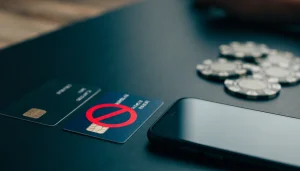
Great Britain has one regulator for commercial gambling: the UK Gambling Commission. The Gambling Act 2005 provides the framework in England, Wales and Scotland; Northern Ireland is outside that Act’s scope. So when people casually say “UK rules”, it is worth being precise about the territory being discussed. The licensing requirement for remote casino services described here concerns consumers in Great Britain.
A site’s physical address is not a workaround. An operator cannot avoid the Great Britain requirement simply by placing its servers or business overseas. The Commission’s reach is tied to offering remote gambling to consumers here, not to where the key equipment happens to sit.
That distinction matters because a website can be accessible from Britain without being licensed by the Commission. Accessibility is not authorisation. The word “international” can sound reassuring, but it does not change which regulator governs a casino’s offer to Great Britain customers.
When a casino accepts crypto
If an operator accepts ADA, that fact points away from it being a UK-licensed casino, because licensed operators cannot take cryptocurrency. It does not, on its own, prove where the casino is licensed or establish that it is permitted to target British players. Those are separate questions.

An offshore casino operates outside the UKGC system and does not hold a UKGC licence. That is not the same as a UK-licensed business with an unusual payment option. The two sit on different sides of the regulatory boundary. Calling a site a “Cardano casino” describes its claimed payment functionality; it does not certify its legal status for a player in Britain.
I would not read a coin logo as a badge of approval. Nor does a polished site, a support chat or a list of games establish that the operator has a British licence. The relevant question is whether the business is licensed by the Gambling Commission for the gambling it offers to consumers in Great Britain.
This can feel like a fussy distinction until money is involved. Then it is the distinction. A crypto payment method does not make a casino legal in Britain, and an overseas location does not exempt a business that offers remote gambling to Great Britain consumers from the licensing requirement.
So the regulatory picture is fairly simple, even if casino marketing tries to blur it: UK-licensed operators cannot accept ADA, while a crypto-accepting site is not thereby a UK-licensed casino. Check the operator’s status with the UK Gambling Commission rather than taking its payment claims as proof. A coin is not a licence.
Choosing a Cardano Casino Without a “Best” List
A “best” label sounds useful until you look at what it is supposed to measure. For a Cardano casino, a fair comparison would need to establish that each named operator accepts ADA, then check its current bonus terms on equal footing. A glossy offer, a familiar brand or a page calling itself a review is not enough. I have learnt that the hard way: the headline is the easy bit; the conditions are where the offer can change shape.
The bonus figures sometimes used to describe crypto casinos are about Bitcoin Cash, not Cardano. A specialist review of BCH casinos reports welcome offers as deposit matches in the 100% to 200% range, with wagering requirements from 20x to 50x the bonus amount. Those numbers describe the offers covered by that review, not a standard for every BCH casino, and certainly not an ADA casino. Applying them to Cardano would be guesswork dressed up as comparison.
That distinction matters because a percentage match tells you very little on its own. You need to know what counts towards wagering, whether the requirement applies to the bonus or the combined balance, which games qualify, and what happens if you withdraw before completing it. Maximum stakes, expiry conditions and cashout caps can also change the practical value. If those details are not checked for the specific offer, the large number on the banner is mostly decoration.

No-deposit promotions need the same scepticism. A specialist review of BCH casinos describes them as less common than at traditional UK sites; when included, they may carry demanding wagering conditions and a low maximum cashout. That is a report about BCH offers, not evidence of a Cardano promotion. And even for BCH, “free” does not mean unrestricted: a cashout limit can make a bonus look much larger than the amount you could actually withdraw.
I would not rank ADA offers by borrowing a bonus table from another cryptocurrency. A Cardano deposit casino would need its own current terms checked: the payment method, eligible games, wagering calculation, time limit and withdrawal rules. Without those details, there is no honest way to say one offer beats another. A bonus comparison built on different currencies is not a comparison. It is a leap.
The same goes for labels such as “best Cardano casino UK” or “best ADA casino”. They imply that the named sites have been checked for ADA payments and that their offers can be weighed against one another. A list is not evidence just because it has stars beside each name. I would want to see clear, current terms tied to the actual operator, not a bonus claim repeated across pages that may be describing a different coin.
There is also a difference between an offer being advertised and being worth taking. A deposit match can tempt you to put in more than you planned, while the wagering requirement keeps the balance tied up until you meet its conditions. No-deposit offers can sound gentler, yet their cashout limits may sharply restrict what you can take away. I have chased the headline before and only read the small print once I was already committed. Bad order.
Do
- Check if the operator explicitly supports ADA deposits and withdrawals
- Review the full promotion terms specific to the ADA payment route
- Compare the actual conditions rather than the banner wording
Don't
- Rely on "best" labels or star ratings without evidence
- Use bonus figures from Bitcoin Cash (BCH) to judge Cardano offers
- Assume a general crypto offer applies to ADA without confirmation
For a useful comparison, the first test is simple: does the operator explicitly support ADA deposits and withdrawals? The next is whether the promotion’s full terms are available and specific to that payment route. Then compare the conditions, not the banner wording. If the site gives no clear answer about whether ADA qualifies, assume the bonus is unconfirmed rather than treating a general crypto offer as proof.
So I would not call any Cardano casino the best on the strength of BCH bonus figures. Those figures can help explain what a specialist review has reported about Bitcoin Cash promotions, with all the limits that come with a changing offer. They cannot establish the value of a Cardano bonus or show that an operator accepts ADA. Keep the coin and the terms together. That is the only comparison that means anything.
ADA Casinos in the UK: What This Comparison Can—and Can’t—Establish
A comparison of casinos that take Cardano needs one distinction up front: an operator’s UK licence and its willingness to accept ADA cannot go together. UK-licensed operators are prohibited from accepting cryptocurrency. So a casino cannot be both a UK-licensed operator and an ADA-accepting one.
That rules out a particular kind of recommendation. I can’t fairly compare UK-licensed casinos by Cardano deposits, because they cannot offer that payment option. A site calling itself an “ADA casino” does not change the position. The label is a claim about payment or branding, not proof that the operator holds a UK Gambling Commission licence or that it accepts Cardano in practice.

This matters because casino comparisons often bundle unlike things together. One site may be described as UK-facing, another as crypto-friendly, and a third as licensed somewhere else. Those descriptions are not interchangeable. For a reader looking specifically for an ADA casino in the UK, the useful first question is not which one sounds most attractive. It is whether “UK” means a UK licence, or simply that the site can be reached from Britain.
I’ve learned to distrust neat labels. “UK casino” can sound reassuring while saying very little about the operator’s regulatory status. And “Cardano casino” can suggest that ADA is accepted, when a name or a promotional claim alone cannot establish how payments actually work. A comparison needs evidence for both points: the operator’s licence and its payment terms. Without those, a ranking would be decoration.
There is a clear boundary for licensed operators: they cannot take cryptocurrency, whether the proposed coin is Cardano or another digital asset. That makes a UK-licensed ADA casino a contradiction, not a niche category waiting to be ranked. If a site accepts ADA, that fact by itself does not make it a UK-licensed casino.
The word “comparison” also needs some care. It can mean comparing operators that share a regulatory framework and payment method, or it can mean comparing sites that happen to use similar crypto wording. Those are different exercises. The first cannot produce a UK-licensed ADA shortlist; the second would need reliable, current evidence about each site before it could say anything useful. A table of names without that foundation would look decisive while leaving the key question unanswered.
I would not treat a Cardano logo, a wallet symbol or a line in an advert as enough. Payment claims should be specific and consistent with the operator’s own terms. Licence claims should be checked separately, rather than inferred from a British flag, sterling prices or the phrase “for UK players”. Those clues may make a site look local. They do not make it licensed.
So the honest comparison is limited but useful: UK-licensed casinos do not accept ADA, because they cannot accept cryptocurrency. Any casino presented as accepting Cardano belongs outside that licensed category, unless the claim itself is wrong. That is the dividing line—not a verdict on which site is safest, fastest or best.
I know that is less satisfying than a shortlist. But an attractive name is not evidence, and a “best” label cannot bridge a regulatory contradiction. For a real-money decision, the distinction between a UK licence and an ADA payment claim matters more than a polished comparison table. No neat ranking fixes that.
Cardano Casino Sites and Slot Rules in Britain
A site calling itself a crypto casino does not, by that label alone, establish that it accepts Cardano. If you are looking at an ADA casino site, the practical check is whether its own cashier explicitly lists ADA as a deposit option. I would not treat a general reference to cryptocurrency as confirmation of that. Nor does an ADA payment option tell you which games are available: a casino may offer slots, other games, or neither.

That distinction matters because the rules below concern online slots in Britain, not a particular payment method. They apply to slots offered by operators serving British customers under the UK gambling framework. They are not special Cardano rules, and they do not prove that any named site provides slots.
British online-slot limits
For customers aged 25 and over, the maximum stake is £5 per game cycle. For customers aged 18 to 24, it is £2 per cycle. The £5 limit for adults came into force on 9 April 2025. These limits are about the stake on each cycle, not a promise that a slot will return a particular amount.
The rules also govern how a spin works. Online slot autoplay is banned in Britain, so a player cannot set a sequence of spins running unattended. Each spin must last at least 2.5 seconds. That can make play feel slower if you are used to rapid rounds, but the point is that a slot session cannot be automated in the same way.
Age checks are part of the process too: operators must verify a customer’s age before allowing them to deposit into a gambling account. So an adult should not expect to deposit first and leave age verification until later.
These controls are easy to miss when a page focuses on coin names or game imagery. I have learned not to read a slot banner as a complete description of the rules. The details that matter are the stake limit for your age group, the minimum spin duration and the ban on autoplay. Those apply whether you are thinking about a familiar slot or searching for one associated with ADA.
A useful way to separate the questions is this: first, does the operator actually say it accepts ADA? Separately, if it offers online slots to customers in Britain, do those slots follow the British rules? One answer does not supply the other. A payment symbol cannot establish that a game is available, and a slot catalogue cannot establish that ADA is accepted.
Keep the scope clear. These limits are specific to online slots; they should not be casually applied to every casino game. And a mention of Cardano does not create an exception to British slot controls. If a site makes a broad claim about playing slots with crypto, look for concrete details about the game and how the stake and spin work rather than relying on the wording of the promotion.
Crypto Casinos Accepting ADA: The UK Position
A casino taking Cardano’s ADA and a casino licensed to serve customers in Great Britain are not the same thing. The payment option tells you what an operator says it will accept; it does not tell you whether that operator can legally offer gambling to people here.

UK-licensed operators are prohibited from accepting cryptocurrency. That includes ADA. So if a site invites you to deposit Cardano, that offer does not come from a UK-licensed casino accepting crypto under a UKGC licence. The distinction matters more than the coin’s name or the promise of a quick wallet transfer.
I used to treat a payment logo as a kind of reassurance: if the site supported a familiar coin, I assumed someone had checked the rest. That was a bad shortcut. A crypto option is a payment feature, not proof of a gambling licence. And a site describing itself as “UK-friendly” is not the same as one holding permission to serve the British market.
The same point applies to searches for an ADA crypto casino or other casinos taking Cardano. Those phrases describe a payment preference, not a regulatory category. Claims about Bitcoin Cash casinos do not establish that a particular operator accepts ADA; the two assets are not interchangeable evidence. I would not treat a BCH deposit guide, casino review or bonus offer as confirmation of a Cardano payment route.
If you encounter a site claiming to accept ADA, separate two checks in your mind. First, is it actually offering Cardano deposits, with clear terms for how the payment is handled? Second, does it hold the relevant UK Gambling Commission licence to offer real-money gambling to customers in Great Britain? A “yes” to the first does not make the second true. Under the UK rules, the two claims do not sit together for a UK-licensed operator.
That leaves a straightforward reading of the market: a crypto-accepting casino operating outside the UK licensing system is not a UK-licensed casino. The UK does not criminalise individuals for gambling offshore, but that does not turn an offshore site into a legal UK operator or give it UKGC status. Don’t blur those two things just because the site lets you open an account from here.
I would keep the decision anchored to the operator’s regulatory position, not the ADA badge on its cashier page. Crypto acceptance alone proves very little about who is running the gambling service, what rules apply, or what recourse you would have if something went wrong. The coin is the easy part. The licence is the part that changes the meaning of the offer.
What “Top Cardano Casino Sites” Would Need to Prove
If you’re considering a casino for Cardano ADA in the UK, check the payment options and withdrawal details that matter to you before choosing. The listed payout speed gives you one specific point to consider.
-
Chanze
- Payout speed
- 1-3 business days
Chanze has a listed payout speed of 1–3 business days. Check whether its payment options suit your Cardano ADA plans.
-
x3bet
- Payout speed
- 1-3 business days
x3bet has a listed payout speed of 1–3 business days. You can use that as one factor when assessing it for your needs.
-
NightLuck
- Payout speed
- 1-3 business days
NightLuck has a listed payout speed of 1–3 business days. Confirm its payment options before deciding whether it fits your Cardano ADA plans.
-
WinBeast
- Payout speed
- 1-3 business days
WinBeast has a listed payout speed of 1–3 business days. Consider this detail alongside the payment options available to you.
-
Jetsetspins
- Payout speed
- 1-3 business days
Jetsetspins has a listed payout speed of 1–3 business days. Check its payment options to see whether they meet your requirements.
-
NightWin
- Payout speed
- 1-3 business days
NightWin has a listed payout speed of 1–3 business days. You may want to verify its payment options before making a choice.
-
Zombillion
- Payout speed
- 1-3 business days
Zombillion has a listed payout speed of 1–3 business days. Check whether the available payment options match what you’re looking for.
-
Dieselwin
- Payout speed
- 1-3 business days
Dieselwin has a listed payout speed of 1–3 business days. Use this as a point of reference and confirm its payment options for yourself.
-
Revery Play
- Payout speed
- 1-3 business days
Revery Play has a listed payout speed of 1–3 business days. Check its payment options to determine whether it suits your Cardano ADA plans.
-
Amunbet
- Payout speed
- 1-3 business days
Amunbet has a listed payout speed of 1–3 business days. Verify its payment options before deciding if it meets your needs.
A casino calling itself crypto-friendly is not proof that it accepts Cardano. Before I could put a site on a list of leading ADA casinos, I’d want to see the operator name its ADA payment option clearly and explain how it works. A vague coin logo or a page listing cryptocurrencies without confirming which ones can actually be used is not enough.
I’d also want the payment details to hold together from start to finish. Can you deposit ADA, and can you withdraw winnings in ADA? Are there conditions that change the payment route or require conversion? Those are basic questions, not fussy extras. A casino may accept one cryptocurrency while leaving another unsupported, and “crypto accepted” can blur that distinction.
Then there is the question of whether the site is a real, identifiable operator rather than a name repeated across promotional pages. I’d check that the business behind it is clear, that its terms describe the payment process, and that the advertised option matches what a customer can use after opening an account. If those details cannot be checked, a ranking gives the appearance of certainty without earning it.
That is where “top” starts to look like advertising. I’ve clicked through enough polished claims to know that a confident label tells you more about the page promoting a casino than about the casino itself. A ranked list should compare evidence on the same basis. Otherwise, the order is decoration.
For a UK reader, the word “top” should not distract from the separate question of whether an operator is licensed to serve British customers. A Cardano payment option, even if genuine, does not establish that. Nor does a place in a list. Keep the payment claim and the operator’s status as two checks, not one.

So I’m not going to attach names to a “top Cardano casino sites” list without being able to establish that each named site really supports ADA and can be assessed consistently. That is not a claim that no such site exists; it is a refusal to turn an unsubstantiated label into a recommendation. A short, honest answer beats a longer list built on guesswork.
If you are checking a site yourself, look for a direct statement about ADA deposits and withdrawals in its payment terms, then make sure the operator identity and relevant licence information are clear. If the page only says “crypto,” treat that as an unanswered question. Less shine, more proof.
Casinos Accepting Cardano: Licensed or Offshore?
A casino may advertise Cardano or ADA deposits, but the payment option does not tell you whether the operator holds a UK Gambling Commission licence. Those are separate questions. If a site taking British customers is outside the UKGC system, it is an offshore casino, and you do not get the UK protections that come with a licensed operator.
The practical difference shows up when something goes wrong. A UKGC-licensed operator must provide an internal complaints process and access to an approved Alternative Dispute Resolution service. With an offshore casino, you cannot use the UKGC complaints route or UKGC dispute resolution, and there is no UKGC regulatory safety net. You are dealing with the operator under its own terms and whatever rules apply where it is licensed. That can leave you with fewer useful routes if a withdrawal is disputed or your account is restricted.
UKGC-Licensed Casino
Provides an internal complaints process, access to approved Alternative Dispute Resolution, and GamStop integration.
Offshore Casino
Operates outside the UKGC system; users have no access to UKGC complaints, approved ADR, or GamStop protections.
There is another difference people can miss: an offshore casino is not integrated with GamStop. If you have registered with GamStop to block access to UK-licensed gambling sites, that does not make an offshore site part of the scheme. Don’t assume a familiar-looking website or a crypto payment option changes that.
I’ve learned not to treat “accepts ADA” as a shortcut for “safe to use”. It describes a payment claim, not a licence, complaint process or self-exclusion arrangement. Before depositing, look up the operator on the UK Gambling Commission’s public register and check that its licence is current and covers the activity offered. If it is not there, it is not a UKGC-licensed casino; a foreign licence does not provide UKGC protection.
That distinction is about the operator, not criminal liability for the player. The UK does not criminalise individuals for gambling with an offshore casino. But that does not turn the site into a legal, UK-licensed option or give you the UKGC safety net. Lawful for the player is not the same as regulated for the British market.
So when you see a casino accepting Cardano, separate the payment method from the regulatory status. If the operator is offshore, expect no UKGC complaints or approved ADR route and no GamStop integration. Those are material trade-offs, not fine print. The coin can move quickly; getting a dispute resolved may not.
No-KYC Cardano Casinos: Don’t Confuse BCH Evidence with ADA
“No KYC” sounds like a simple promise: open an account, deposit, and play without proving who you are. I have learned to read that claim more carefully. It can describe an account-opening process, not a guarantee that checks will never happen.

The limited details often repeated about email-only registration concern Bitcoin Cash casinos. A specialist review described most offshore BCH casinos as allowing an account to be opened with an email address and password, with traditional identity checks bypassed at that stage. Another description of BCH casinos operating outside the Commission’s licensing system says they tend to use wallet-based deposits and minimal identity checks.
That is specific to BCH. Bitcoin Cash and Cardano are different cryptocurrencies, and a description of one payment method does not establish how a casino handles ADA or verifies its customers. So I would not treat an email-and-password claim about BCH as evidence that a particular Cardano casino offers no-KYC play.
There is another catch in the wording. “Minimal” does not mean “none”, and an easy sign-up does not tell you whether a casino may ask for identity documents later. If an operator’s claim matters to your decision, read its account and verification terms rather than relying on a short promotional label. A headline can leave out the important bit.
For a UK player, there is also a difference between a site advertising no checks and a UK-licensed casino. UK-licensed operators must verify a customer’s age before allowing a deposit. A no-KYC claim should not be read as a promise that an operator can ignore its obligations, or as proof that the site is licensed to serve British customers.
The BCH vs ADA Distinction
Information regarding email-only registration and minimal identity checks often cited in reviews refers specifically to Bitcoin Cash (BCH) casinos. Because these are different cryptocurrencies, BCH data does not establish how a Cardano casino handles KYC or verification.
I would keep the categories separate: BCH-specific account claims on one side; claims about Cardano on the other. If a site says it accepts ADA and requires no identity checks, look for clear terms explaining what “no KYC” means and when checks may apply. Don’t let a familiar crypto label do the verifying for you.
Cardano Casino Deposits and Payouts: What the BCH Data Says
A quick crypto deposit can sound like the whole story: send coins, see a balance, cash out just as neatly. I learnt not to treat that promise as a payout guarantee. Blockchain processing and a casino’s withdrawal handling are separate steps—and figures reported for Bitcoin Cash (BCH) do not establish how ADA payments work.
A specialist review of BCH casinos describes deposits as reaching one on-chain confirmation in around 10 minutes. That is a report about BCH, not a timing rule for Cardano. The same review notes that BCH transactions can be cheaper and faster than Bitcoin transactions, linking that difference to BCH’s 32MB block-size limit. It says nothing about an ADA transfer’s fee or confirmation time.
What reported BCH cashouts show
The specialist review also reports that BC.Game and Stake processed BCH cashouts within 10 minutes of a withdrawal request, often in less than five. Those are reported outcomes for named operators and BCH, not a promise that every withdrawal clears on that schedule. A blockchain transfer may be quick while an operator’s own approval or processing takes longer.
That distinction matters when you see “fast payout” in promotional copy. It may refer to one part of the journey, while the complete time depends on the casino’s handling as well as the payment network. A reported BCH cashout time cannot be carried across to Cardano by swapping the currency name.
Nor does a BCH deposit confirmation figure tell you whether an ADA deposit will be credited at the same speed. Different networks have different mechanics; the BCH figures above should stay attached to BCH. Easy mistake to make.

So if you are weighing an ADA deposit or withdrawal, treat claims about BCH fees, confirmations and cashouts as comparisons only—not as evidence of Cardano casino performance. Ask what currency and network a stated processing time actually covers, and distinguish the casino’s processing from on-chain settlement. If the claim does not clearly say, I would not use it to plan when funds will arrive. A neat number in an advert is not the same as a reliable Cardano payout estimate.
Cardano Casino Games: What Can Be Confirmed
If you want to play casino games using Cardano, the key distinction is between a game and a way to pay. ADA is the cryptocurrency; it does not tell you which games a casino offers, or whether a particular title can be played with that balance.
That means claims about particular slots, table games or live-dealer titles should be treated cautiously unless the operator identifies the games and explains how ADA is used with them. A page saying “crypto games” is not enough to establish that its games are connected to Cardano.

This matters because a casino may use crypto language broadly while offering no clear, game-by-game information about ADA. Before relying on a claim, look for the actual title, its provider and an explanation of whether the currency is accepted for play or merely mentioned in general payment copy. If those details are absent, you have no solid basis for assuming the game works with ADA.
I’ve learned not to let a polished lobby do the proving. A long catalogue can look convincing, but it does not establish a Cardano connection by itself. Nor does a game appearing at a casino prove that its provider has built a Cardano version or supports ADA directly.
That is not proof that no operator has ever offered such an arrangement; it is a reason not to mistake broad crypto claims for evidence about a specific game. Keep the question concrete: which title, from which provider, and what exactly does “play with ADA” mean on that site?
Can I legally deposit Bitcoin Cash at UK casinos?
No, not at a UK-licensed casino: operators licensed by the Gambling Commission are prohibited from accepting cryptocurrency. The UK does not criminalise offshore gambling by individuals, but an offshore casino is not part of the UK licensing system.
Do I need to verify my identity to play at a BCH casino?
At offshore BCH casinos, you may be able to create an account with only an email address and password, as many use minimal identity checks. However, blockchain deposits can often be traced to a known exchange.
Does any Gambling Commission-licensed casino currently accept Bitcoin Cash deposits?
No. No UK-licensed casino currently accepts Bitcoin Cash as a direct payment method.
Are Bitcoin Cash casino winnings taxable in the UK?
No. Gambling winnings are not subject to UK income tax or capital gains tax, whether you play with pounds or cryptocurrency.
Is a casino accepting Bitcoin Cash automatically unlicensed for British players?
A casino accepting Bitcoin Cash cannot be UK-licensed, because UK-licensed operators cannot accept cryptocurrency. Check the Gambling Commission’s register to establish whether the operator is authorised to offer gambling to consumers in Great Britain.
Payments at UK Casinos: Compare Deposit Methods
Content created by the «whynother» team